

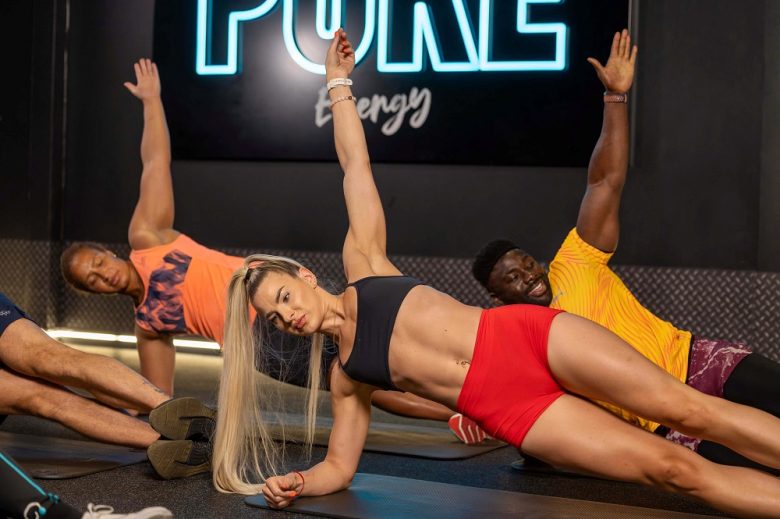
When most people picture strength training, they imagine crowded weight rooms filled with heavy barbells, massive dumbbells, and complex gym machinery. While lifting heavy weights is undeniably effective for muscle building, it is far from the only path to developing exceptional physical strength, endurance, and muscular definition. High-resistance calisthenics, bodyweight manipulation, isometric holds, and simple home equipment can build significant strength without placing intense axial load on your spine or joints.
Building strength without heavy weights relies on fundamental principles of exercise science, including mechanical leverage, time under tension, increased range of motion, and progressive overload. By learning how to manipulate these variables, you can create challenging workouts anywhere, whether in a living room, a park, or a hotel room during travel.
The Science of Building Muscle and Strength Without External Load
Muscles do not possess eyes; they cannot tell whether resistance comes from an iron plate, a heavy dumbbell, or the force of gravity acting against your own body mass. What your nervous system and muscle fibers respond to is mechanical tension, metabolic stress, and muscle damage.
To continually build strength without adding heavy external weight, you must apply progressive overload through alternative variables:
- Manipulating Leverage: Altering your body angle or reducing contact points increases the load on working muscles. Moving from a standard push-up to an elevated feet push-up or a single-arm variation significantly increases the resistance.
- Increasing Time Under Tension: Slowing down the tempo of an exercise, particularly the eccentric or lowering phase, forces muscle fibers to work harder and recruit more motor units during every repetition.
- Expanding Range of Motion: Performing exercises through a deeper, full range of motion engages more muscle tissue and builds strength at extreme joint angles.
- Incorporating Isometrics: Holding static positions at points of peak muscle contraction recruits high-threshold muscle fibers and improves joint stability.
Core Upper-Body Strength Movements
Building a strong upper body without heavy iron requires exercises that challenge the chest, shoulders, back, and arms through compound bodyweight patterns.
Advanced Push-Up Variations
Standard push-ups quickly become an endurance exercise rather than a strength builder as your body adapts. To keep building raw upper-body power, transition to more demanding variations:
- Decline Push-Ups: Placing your feet on an elevated surface shifts a higher percentage of your body weight onto your upper chest and anterior deltoids.
- Archer Push-Ups: By shifting your weight toward one arm while keeping the opposite arm straight as a stabilizer, you dramatically increase the load on the working side, bridging the gap toward single-arm push-ups.
- Pike Push-Ups and Handstand Push-Ups: Elevating your hips into a pike position, or performing vertical presses against a wall, places the primary workload on your shoulders and triceps, mimicking heavy overhead dumbbell presses.
Bodyweight Pulling Movements
Pulling movements are essential for developing a strong back, healthy shoulder joints, and powerful biceps. While pushing movements are easy to do on the floor, pulling exercises require a pull-up bar, gymnastics rings, or a sturdy horizontal edge.
- Strict Pull-Ups and Chin-Ups: Pulling your entire body mass from a dead hang to chin-over-bar height remains one of the ultimate tests of relative upper-body strength. Varying your grip between overhand, underhand, and neutral targets different areas of the lats, traps, and arm flexors.
- Inverted Rows: Positioned under a sturdy bar or suspension trainer with your feet on the ground, pulling your chest to the bar builds the mid-back, rear deltoids, and rhomboids. Elevating your feet onto a chair or bench increases the resistance significantly.
Lower-Body Strength Exercises
The legs contain the largest and most powerful muscle groups in the human body. Because these muscles carry your body weight daily, building lower-body strength without heavy weights requires unilateral single-leg exercises that maximize mechanical resistance.
Unilateral Single-Leg Training
Working one leg at a time doubles the effective resistance placed on the target muscles while improving balance, hip stability, and athletic coordination.
- Pistol Squats: Performing a single-leg squat with the non-working leg extended forward requires immense quad strength, hip mobility, and balance.
- Bulgarian Split Squats: Elevating your rear foot on a bench or couch places nearly all your body weight onto the front leg, delivering intense muscular tension to the quadriceps, glutes, and hamstrings.
- Single-Leg Romanian Deadlifts: Hinging at the hips while standing on one leg builds hamstrings and glutes while strengthening the ankle and knee stabilizers without compressing the lower back.
Explosive Plyometrics
Plyometric exercises utilize the stretch-shortening cycle of muscle tissue to develop explosive force, speed, and athletic power without needing external weights.
- Jump Squats and Tuck Jumps: Exploding vertically from a deep squat position recruits fast-twitch muscle fibers that are typically targeted only with heavy weightlifting.
- Broad Jumps: Jumping forward as far as possible from a standing position builds horizontal power in the posterior chain.
Midsection and Total-Body Isometric Strength
True functional strength requires a resilient core capable of transferring force efficiently between the upper and lower body. Isometric exercises build isometric hold capacity, core stiffness, and anti-rotational stability.
Bodyweight Core Progressions
- Hollow Body Holds: Lying flat on your back and pressing your lower spine into the floor while holding your arms and legs slightly elevated creates extreme tension across the entire anterior core.
- RKC Planks: Unlike standard passive planks held for long durations, the RKC plank requires you to actively squeeze your glutes, pull your elbows toward your toes, and tense your entire body as hard as possible for fifteen to thirty seconds.
- L-Sits: Supporting your body mass on your hands while extending your legs straight out in front of you parallel to the floor demands incredible abdominal strength, hip flexor mobility, and tricep endurance.
Utilizing Lightweight Tools for Resistance
If pure bodyweight exercises become either too easy or too technically difficult, incorporating inexpensive, portable tools can add smooth, scalable resistance.
Resistance Bands
Loop resistance bands provide accommodating resistance, meaning the tension increases as the band stretches through the movement. Passing a resistance band behind your back during push-ups or wrapping it under your feet for banded rows increases the workload at the point of peak muscle contraction.
Gymnastic Rings and Suspension Trainers
Suspension straps and gymnastic rings introduce instabilty to classic movements like dips, push-ups, and rows. The continuous effort required to stabilize your body forces smaller stabilizer muscles to work intensely alongside primary muscle groups.
Frequently Asked Questions
Can you build as much muscle with bodyweight exercises as with heavy weights?
Yes, you can build substantial muscle mass using bodyweight exercises provided you train with high intensity, push close to muscular failure, and systematically apply progressive overload by choosing harder exercise variations over time. While heavy weightlifting simplifies adding incremental load, bodyweight training builds equivalent muscle when mechanical tension is maintained.
How do I apply progressive overload if I am not adding weight plates?
Progressive overload without weights is achieved by increasing repetitions, slowing down the movement tempo, reducing rest periods between sets, increasing the movement’s range of motion, or advancing to a more leverage-disadvantaged exercise variation, such as moving from standard push-ups to single-arm or elevated push-ups.
Is strength training without heavy weights safer for my joints?
In general, bodyweight movements and low-load resistance tools put less compressive axial stress on the spine and joints compared to heavy barbells or machines. This makes non-heavy weight training an excellent option for individuals recovering from joint issues, older adults, or anyone looking to reduce injury risk while building functional strength.
How many times a week should I train for optimal strength gains without heavy weights?
Training three to four times per week is ideal for most individuals. This frequency allows you to hit major muscle groups two to three times weekly while providing adequate rest days for muscular recovery, tissue repair, and central nervous system adaptation.
What should I do if a bodyweight exercise is too difficult to perform with good form?
Regress the exercise to a manageable level by adjusting body angles or leverage. For example, if standard push-ups are too challenging, perform inclined push-ups with your hands elevated on a wall, counter, or sturdy bench. Gradually lower the surface incline as your strength improves.
Are isometric holds effective for building real-world strength?
Isometric holds build strength within specific joint angles and recruit a high percentage of motor units. They improve joint stability, tendon resilience, and muscular endurance, making them highly effective when combined with dynamic, full-range movements.
Do I need to train to failure on bodyweight exercises to get strong?
You do not need to reach total muscular failure on every set, but you should train with high effort. Ending most sets within one to three repetitions of technical failure—where you can no longer complete a rep with proper form—provides a sufficient stimulus for strength and muscle adaptations.