

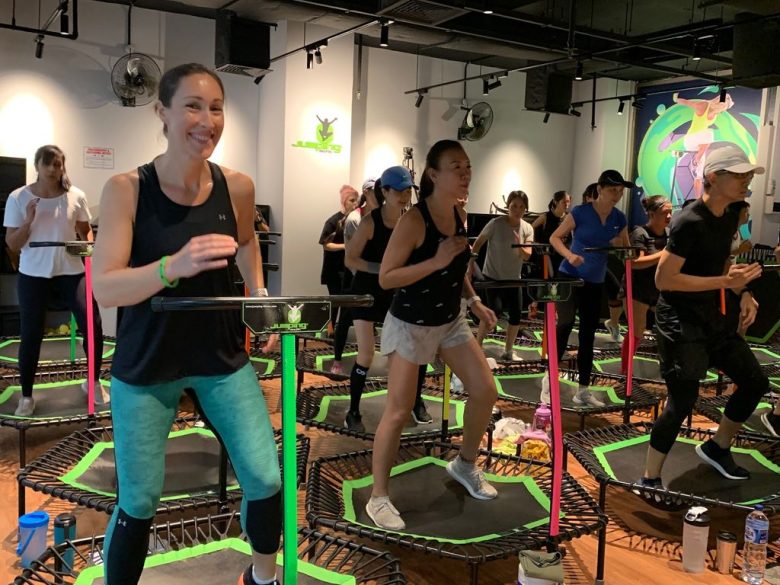
A familiar movement can feel unexpectedly demanding when performed on a different trampoline. The choreography has not changed, yet the timing, muscular effort and confidence required to stay centred may all shift. Anyone exploring trampoline fitness Singapore sessions should understand that the rebound surface is not a neutral platform. Its tension and response interact with the participant on every contact.
This does not mean one surface is universally better. A firmer-feeling trampoline may suit a compact, quick rhythm, while a more compliant surface may require a different landing strategy. Training load depends on how the equipment responds, how the participant adapts and how long that interaction is repeated. Comparing trampolines only by bounce height misses the mechanics that create the experience.
Stiffness Describes How the Surface Responds to Force
In simple terms, a stiffer system resists deformation more strongly, while a more compliant system deforms further under a given load. A trampoline is more complex than a single spring. The mat, elastic or metal-spring system, frame dimensions and attachment pattern all contribute to how the surface behaves.
The participant is part of that system. Body mass, landing position and movement speed influence how far the surface deforms. Two people can therefore describe the same trampoline differently. One may experience a quick, firm return, while another feels a deeper contact and longer transition.
Perceived stiffness is also affected by technique. A participant who lands with a rigid ankle and narrow pressure pattern may experience the surface as abrupt. Someone who coordinates the ankle, knee and hip may distribute the contact differently and describe the same mat as responsive.
Contact Time Changes the Rhythm Available to the Body
Contact time is the period during which the participant and mat interact before the body begins the next upward phase. A surface that deforms more may create the sensation of a longer contact, although the actual outcome depends on the complete equipment-user interaction.
Longer-feeling contact can provide time to organise a larger movement, but it can also make a fast musical cadence harder to maintain. A quicker return may support compact rebounds, yet it can feel demanding when the participant is late or poorly positioned.
This is why a cadence that felt natural on one trampoline may feel rushed on another. The participant should not immediately force the old range onto the new surface. The first adjustment is often to reduce bounce height, establish the equipment’s timing and allow movement range to grow only after contacts become predictable.
Energy Return Is Useful Only When It Can Be Controlled
Trampolines store part of the energy applied during deformation and return it as the surface recoils. Participants sometimes interpret greater visible bounce as better energy return. That conclusion is too simple because bounce height also reflects body position, timing and how much work the participant contributes.
A responsive surface can reduce the effort required to create vertical movement, but it can increase the coordination required to remain centred. If the participant lands late, the returning surface may amplify the error. Energy that is not directed through a stable position becomes unwanted movement.
The useful objective is not to extract the maximum possible rebound. It is to produce a repeatable cycle in which the participant controls the descent, meets the surface at the right time and redirects the return into the intended movement.
The Same Class Can Create a Different Local Training Load
A change in surface response can shift where fatigue is felt. A participant may use more calf tension to manage a quicker rebound. On a deeper-feeling surface, the thighs and hips may contribute more to maintaining range and recovering position. These are tendencies, not fixed rules, because technique and choreography remain influential.
Local fatigue can also increase when the participant fights the equipment. Trying to impose the timing of another trampoline may lead to toe gripping, excessive knee bending or large arm corrections. Heart rate can rise, but the extra effort may reflect inefficiency rather than a purposeful progression.
This distinction matters when comparing sessions. A harder-feeling class is not automatically a better class. The participant should ask whether the added demand came from an intentional training variable or from difficulty adapting to the equipment.
Surface Research Requires Cautious Interpretation
Biomechanics researchers have examined trampoline dynamic characteristics and the interaction between sprung surfaces and users. A methodological study that compared mini-trampolines with different spring configurations found only small differences in the tested take-off measures, illustrating that expected equipment effects do not always appear clearly in a limited experiment.
These findings should not be stretched into claims about every fitness trampoline. Equipment designs, users and tasks vary. The stronger conclusion is that trampoline response should be assessed as a system rather than inferred from spring count, appearance or a marketing label.
For participants, subjective feel remains useful when paired with observable outcomes. If a surface feels firmer, note whether cadence, landing position and calf fatigue actually change. Description becomes more valuable when it is tied to performance.
Technique Should Adapt Before Intensity Increases
The first minutes on an unfamiliar trampoline should function as calibration. Begin with compact vertical rebounds and a simple arm position. Observe how far the mat deforms, when the return occurs and whether the feet remain in the intended area.
Next, test a slightly larger range without changing cadence. If control remains stable, add the class arm pattern. Directional movement should come after the participant understands the vertical response. This sequence separates equipment adaptation from general fatigue.
An instructor may cue the participant to reduce range, soften unnecessary stiffness or change foot pressure. The best cue is the one that makes the next contacts more repeatable. There is no need to reproduce an identical visual bounce across different equipment if a slightly different strategy produces better control.
Maintenance and Wear Can Change Perceived Response
Equipment response is influenced by condition as well as design. Mat tension, attachment components and frame stability should be maintained according to the manufacturer’s requirements. Participants should not attempt to diagnose or repair class equipment themselves.
An unusual change in rebound, visible damage, unexpected noise or movement in the frame should be reported to staff. The appropriate response is to stop using the equipment until it has been checked, not to compensate with a more aggressive landing.
Wear may develop gradually, which is why consistent facility checks matter. Participants can contribute by reporting differences, but formal inspection belongs to trained staff and the relevant service provider.
Standardisation Matters When Tracking Progress
If a participant uses different trampolines across sessions, performance comparisons require context. A higher cadence or lower perceived effort may reflect equipment differences rather than improved conditioning. This does not make tracking impossible, but the equipment should be recorded when it materially changes the session.
Use measures that remain interpretable: landing consistency, the movement option completed, perceived exertion and recovery. When possible, compare progress across similar class formats and equipment before drawing conclusions.
Participants attending xBounce formats through TFX Singapore can also use the instructor-led environment to learn how movement should be scaled when a rebound surface feels unfamiliar. Technique adaptation is a training skill, not evidence that the previous session was wrong.
Equipment Feel Is Part of the Training Dose
Two trampolines can feel different because mat tension, spring response, contact timing, user mass and movement strategy interact. The surface changes the problem the body must solve, but it does not determine the outcome by itself.
The best response is calibration rather than judgement. Reduce range, identify the surface timing and rebuild complexity gradually. Once the participant can use the rebound instead of fighting it, training load becomes easier to interpret and progression becomes more meaningful.
Frequently Asked Questions
Does a firmer trampoline always create a harder workout?
No. A firmer-feeling return may increase timing demands for one participant but support quick compact rebounds for another. Technique, cadence and movement range influence the final workload.
Why do my calves fatigue more on a different trampoline?
You may be using extra ankle stiffness or toe pressure to control an unfamiliar return. Reduce range, establish timing and ask the instructor for a technique adjustment.
Should bounce height be identical across all trampolines?
Not necessarily. Height is less important than repeatable contacts, centred landings and the ability to perform the intended choreography with control.
What should I do if the equipment suddenly feels unusual?
Stop using it and report the change to staff, especially if there is visible damage, an unexpected noise or frame movement. Do not attempt a repair during class.