

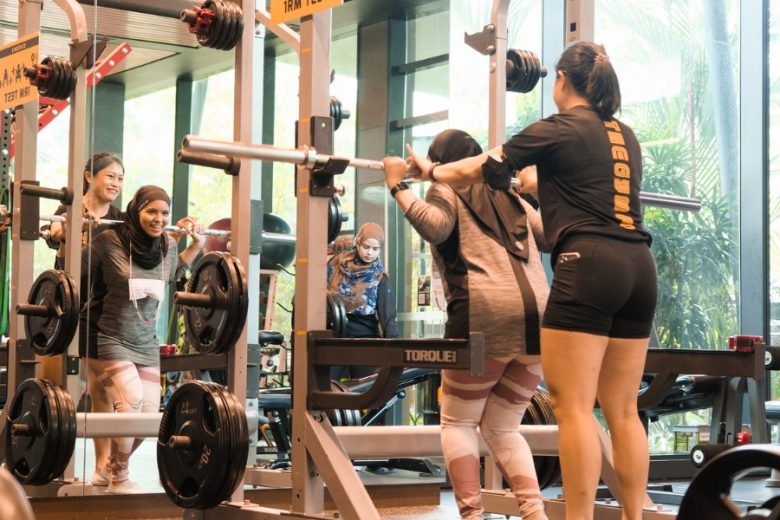
Joint health is no longer a concern limited to seniors or athletes recovering from injury. In Singapore, where long working hours, sedentary routines, and high stress levels are common, joint discomfort is increasingly seen among working adults in their 30s and 40s. Many people associate joint care with stretching, supplements, or low-impact movement, but one of the most effective and sustainable approaches is often overlooked. Structured strength-based training, when done correctly in a professional environment, plays a critical role in protecting joints, improving mobility, and preventing long-term degeneration.
Choosing the right fitness gym singapore is not about aesthetics or short-term results. It is about creating a training foundation that allows your joints to remain resilient, stable, and functional for decades. Strength training, when programmed intelligently, does not damage joints. Instead, it reinforces the entire system that supports them.
Understanding How Joints Actually Stay Healthy
Joints do not function in isolation. They rely on muscles, tendons, ligaments, cartilage, and neural coordination working together. When people experience knee pain, shoulder stiffness, or lower back discomfort, the issue is often not the joint itself but weakness or imbalance in the surrounding structures.
Key contributors to joint health include:
- Muscle strength and balance around the joint
- Controlled movement through a full range of motion
- Gradual and progressive load exposure
- Adequate recovery and circulation
Strength-based training addresses all of these factors simultaneously, which is why it is far more effective than passive approaches such as rest alone or unstructured activity.
Why Strength Training Protects Joints Rather Than Damaging Them
One of the most persistent myths is that lifting weights wears down joints. In reality, joints deteriorate faster when they are underused or exposed to repetitive stress without strength support. When muscles are weak, joints absorb more force than they are designed to handle.
Strength training improves joint health by:
- Increasing muscular support so joints carry less direct load
- Enhancing proprioception, which improves movement control
- Stimulating cartilage nourishment through controlled compression
- Reducing instability that leads to wear and tear
When training is supervised and well structured, joint-friendly strength work becomes a protective tool rather than a risk factor.
The Role of Progressive Load in Joint Longevity
Joints adapt to stress just like muscles do, but only when stress is applied progressively. Sudden overload, poor technique, or excessive repetition can cause problems. Progressive load, however, teaches joints to tolerate force safely over time.
A well-designed strength programme in a professional gym environment focuses on:
- Gradual increases in resistance
- Proper alignment and movement patterns
- Balanced development across opposing muscle groups
- Avoiding excessive strain on a single joint
This approach strengthens connective tissues and improves joint tolerance, reducing the likelihood of chronic pain or injury.
How Strength Training Improves Knee Health in Adults
Knee pain is one of the most common complaints among Singapore adults, especially those who sit for long hours or engage in high-impact activities without proper conditioning. Contrary to popular belief, avoiding knee loading often worsens the problem.
Strength training supports knee health by strengthening:
- Quadriceps to stabilise knee extension
- Hamstrings to balance anterior forces
- Glutes to control hip and knee alignment
- Calves to absorb ground reaction forces
Exercises such as controlled squats, leg presses, and step-ups, when performed correctly, improve knee tracking and reduce joint stress in daily activities like climbing stairs or walking long distances.
Shoulder and Upper Body Joint Stability Through Strength Training
Modern lifestyles place enormous strain on the shoulders due to desk work, mobile phone usage, and poor posture. This often leads to impingement, stiffness, or weakness.
Strength-based training improves shoulder joint health by:
- Strengthening the rotator cuff muscles
- Improving scapular control and posture
- Enhancing stability during overhead and pushing movements
- Restoring balanced strength between the front and back of the upper body
Rather than avoiding upper body training, structured resistance work helps restore natural shoulder mechanics and reduces the risk of long-term degeneration.
The Importance of Range of Motion in Joint Protection
Joint health is closely linked to the ability to move freely through a full and controlled range of motion. Strength training that incorporates mobility-focused exercises ensures that joints remain adaptable rather than stiff.
A structured programme emphasises:
- Controlled eccentric movements
- Strength at end ranges, not just mid-range
- Joint-friendly tempos rather than rushed repetitions
- Mobility work integrated into strength sessions
This approach maintains joint lubrication, improves circulation, and prevents the stiffness commonly associated with ageing.
Why Gym Environment Matters for Joint-Safe Training
Training environment plays a significant role in joint outcomes. Unsupervised workouts or random routines increase the risk of poor technique and imbalanced loading. A professional gym setting provides access to equipment, space, and expertise that supports long-term joint health.
A well-equipped gym allows for:
- Adjustable resistance suitable for different joint conditions
- Machines that guide safe movement patterns
- Free weights that develop stabilising strength
- Recovery tools that support circulation and flexibility
This is where a structured facility such as True Fitness Singapore becomes particularly valuable. It offers an environment where strength training can be adapted to individual joint needs rather than forced into a one-size-fits-all approach.
Strength Training Versus Cardio for Joint Preservation
While cardiovascular exercise is important, relying on cardio alone often fails to protect joints. Repetitive movements such as running or cycling can place consistent stress on the same joint structures without strengthening them adequately.
Strength training complements cardio by:
- Reducing joint impact through stronger shock absorption
- Improving posture and movement efficiency
- Allowing continued activity even as joints age
- Balancing endurance with structural resilience
A combined approach, with strength training as the foundation, offers the most sustainable joint health outcomes.
How Consistent Training Prevents Age-Related Joint Decline
Joint degeneration is not solely an age issue. It is often a result of years of underloading, poor movement habits, and muscular imbalance. Strength-based training slows this decline by maintaining tissue quality and neuromuscular coordination.
Long-term benefits include:
- Reduced risk of osteoarthritis progression
- Improved balance and fall prevention
- Better movement confidence in daily life
- Sustained independence as the body ages
Consistency matters more than intensity. Training two to four times per week with proper structure delivers better joint outcomes than sporadic high-effort workouts.
FAQs
Q: Can strength training help if I already have mild joint pain?
A: Yes. When properly programmed, strength training often reduces joint pain by improving muscular support and movement control. It is important to start with appropriate loads and progress gradually.
Q: Is machine-based training better than free weights for joint health?
A: Both have benefits. Machines provide stability and controlled movement, while free weights improve joint stabilisation. A balanced programme usually includes both.
Q: How long does it take to notice joint improvements from strength training?
A: Many people experience reduced discomfort and improved mobility within four to eight weeks, provided training is consistent and recovery is adequate.
Q: Should older adults avoid heavy resistance training?
A: Not necessarily. Load should be appropriate to individual capacity, but resistance training is highly beneficial for older adults when supervised and progressively increased.
Q: Can strength training replace physiotherapy for joint issues?
A: Strength training complements physiotherapy but does not replace it. For active injuries or medical conditions, professional assessment is essential before starting any programme.
Q: How often should I train for joint health without overloading my body?
A: Two to four structured strength sessions per week is effective for most adults. Recovery days are equally important for joint adaptation.
By focusing on strength rather than avoidance, joint health becomes a long-term investment rather than a reactive concern. When training is structured, progressive, and supported by the right environment, joints do not just survive. They thrive.